

 We have seen relatively few disease issues in the TDL the past month or so. Throughout Upper Midwest temperatures have been warm, but we have also been quite dry. However the forecast for next week is very different. Highs for next week will been in the low to mid-ninties, more importantly night time temperatures will exceed 72 for most of next week. I included a 7-day forecast from NBC 15 here in Madison, but areas west and south of us will likely experience even hotter temperatures. I know that doesn't compare with the excruciating heat experienced by those in the Southeast and Central US, but the forecast is significant for the Upper Midwest. Especially considering that many courses have substantial Poa annua populations.
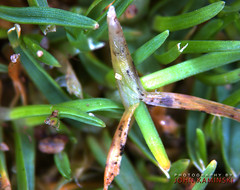
IF YOU haven't done so already, this weekend or early next week is a great time to protect your plants against brown patch and Pythium blight. Environmental conditions next week will be ripe for these two diseases. Moreover, anthracnose, dollar spot, summer patch and leaf spot could also flare up depending on where you are with fungicide applications. I mention leaf spot because we have been dealing with a Bipolaris leaf spot in the Midwest for two or three years that does not respond well to applications of iprodione. This disease also remains active throughout the summer months and has been problematic primarily for older golf courses. The disease tends to be more severe on certain clones of older creeping bentgrass fairways causing a "splotchy" reddish appearance to fairways. It does not manifest into distinct symptom. An image of typical stand symptoms is below.

Last year we initiated a fungicide trial at a course in Wisconsin to investigate chemical control options and found that Heritage TL, Insignia and a tank mixture of Chipco 26GT and Daconil Ultrex suppressed symptoms when compared to the non-treated control. Chipco 26GT by itself did not suppress the symptoms, indicating that Daconil Ultrex was more effective in controlling this disease. Note that I use the word suppress we have not been able to prevent the development of this disease, only suppress the symptoms. Here is the report from last year's trial. This has been a difficult disease to work with because it only seems to affect certain clones. Thus it took some time to figure out how to rate it.
Some other things to consider for next week: limit mowing by alternating mowing and rolling, skip clean-up passes, raise the mowing height and absolutely avoid applications of DMI fungicides to putting greens.