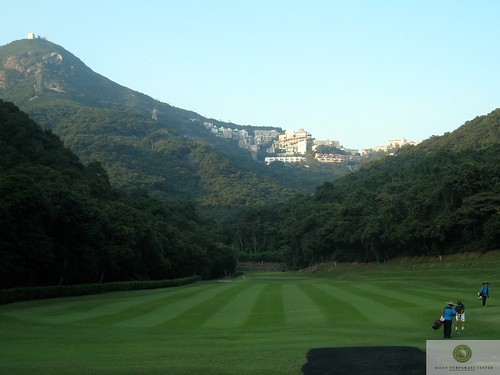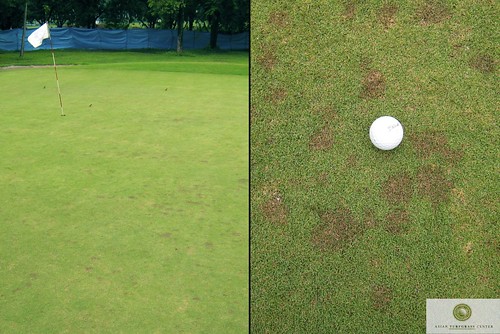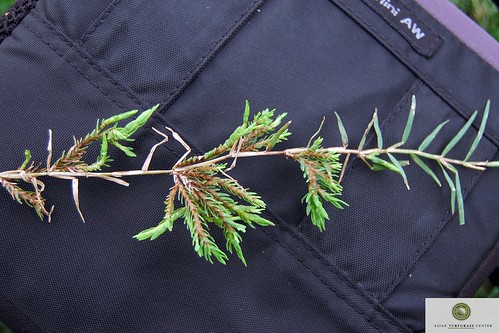


I sometimes find such healthy grass that I have little disease to write about, but this week was an exceptional one. I went from Kanchanaburi to Bangkok, Singapore, and Da Nang, seeing a number of grasses and on them an assortment of pathogens. Click the thumbnails for a full-size image and description.
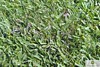
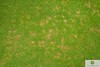
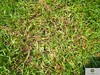
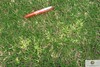
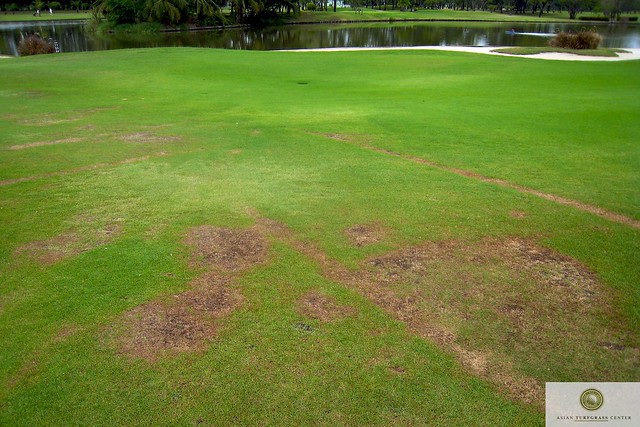
If there were an award for diseases, seashore paspalum would win this week, with two different unidentified diseases and slime mold and dollar spot, with a bonus for some extraordinary drought stress. In the image below, there is an unidentified patch disease and dollar spot on a seashore paspalum fairway in Bangkok. And you can see the drought stress in the drain lines going to the catch basin in the background. But wait! Can you see the patch of Zoysia matrella in the center-left of the photo? The Zoysia matrella that is free of disease and doesn't have the drought stress of the paspalum even though it is growing in the drain line? Seashore paspalum does not grow well at all in Southeast Asia in areas of low soil moisture content.
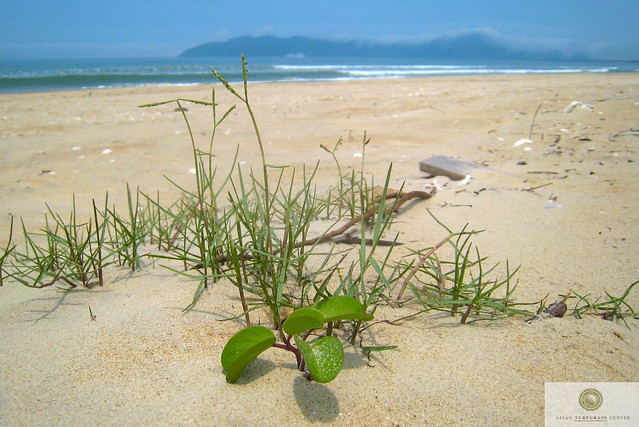
Seashore paspalum grows wild in tidal swamps and in intertidal zones. Which is exactly where I found it growing on the beach at Da Nang (below), in its natural environment, and free of diseases. But come in from the beach a short distance, where the high tide does not reach, and I found wiry Zoysia matrella growing in the dunes.
There was brown patch on bermudagrass at Vietnam and bermudagrass white leaf, which I think is the most unsightly disease, on bermudagrass at Singapore and Vietnam.
Most of the diseases, you notice, were on seashore paspalum and bermudagrass. I saw two types of broadleaf carpetgrass this week, both free of any disease. This grass thrives in the umbrageous conditions so ubiquitous in tropical Southeast Asia, as does zoysiagrass.
And for those more interested in cool-season grasses, you probably read with some interest the post from Dr. Kerns and Dr. Soldat a few weeks ago about managing potassium on cool-season turf. I'm fascinated by the Park Grass experiment and its results showing that potassium and lime application cause a proliferation of dandelions and other weeds, and the most recent issue of the Green Section Record has an article with some insights into that experiment and how the results "carry lessons of high importance in the growing of golf turf."